
Pulse Volume Recording (PVR) with CuffMatch™ Technology
VasoGuard's CuffMatch technology lets clinicians immediately identify improper cuff wrapping by comparing the volume of air in each cuff, preventing subsequent incorrect blood pressure values that could lead to misdiagnosis.
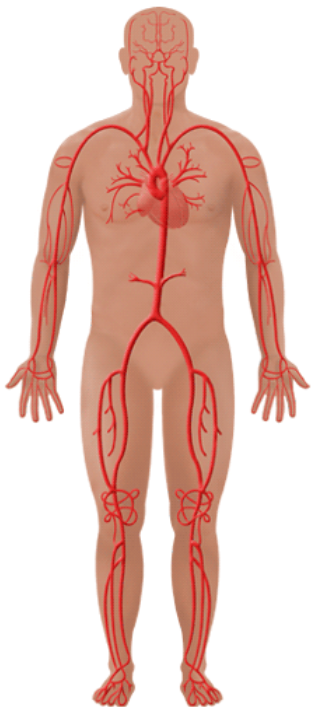
A volume mismatch between cuffs reveals improper wrapping before it skews the readings.
CuffMatch™ adds a real-time display of the accumulated air volume in each cuff.
See a Full Study
A real lower-extremity exam records a waveform at every cuff level down both legs. CuffMatch compares the air volume side to side, so a loose or too-tight cuff is flagged before its dampened or distorted waveform can be mistaken for disease.
What is CuffMatch?
Pulse Volume Recording (PVR) is a non-invasive, air-plethysmographic vascular test. A blood pressure cuff senses the small change in limb volume that occurs with each heartbeat and records it as a waveform, helping diagnose peripheral artery disease (PAD) and localize blockages, while staying reliable even in calcified, non-compressible vessels. A PVR waveform is a graphical representation of the blood volume changes in a limb over time. The resulting waveform's shape, particularly its rapid upstroke, well-defined peak, dicrotic notch, and gradual downstroke, helps assess the health of peripheral arteries. VasoGuard's CuffMatch technology takes this a step further by providing real-time air volume measurements in cubic centimeters (cc), allowing clinicians to see the actual volume of air in each cuff during testing.
- Non-invasive and painless for the patient
- Provides both qualitative waveforms and quantitative data
- Essential for diagnosing peripheral arterial disease (PAD) and other vascular conditions
Live Air Volume Display (cc)
- Live monitoring of air volume in each cuff during testing
- Real-time cc values displayed for each limb segment
- Comparison of cc values between cuffs reveals improper wrapping
- Differences in cc values indicate potential measurement errors
- Immediate feedback prevents incorrect blood pressure readings
- Objective data for ensuring test accuracy and reliability
How Does CuffMatch Work?
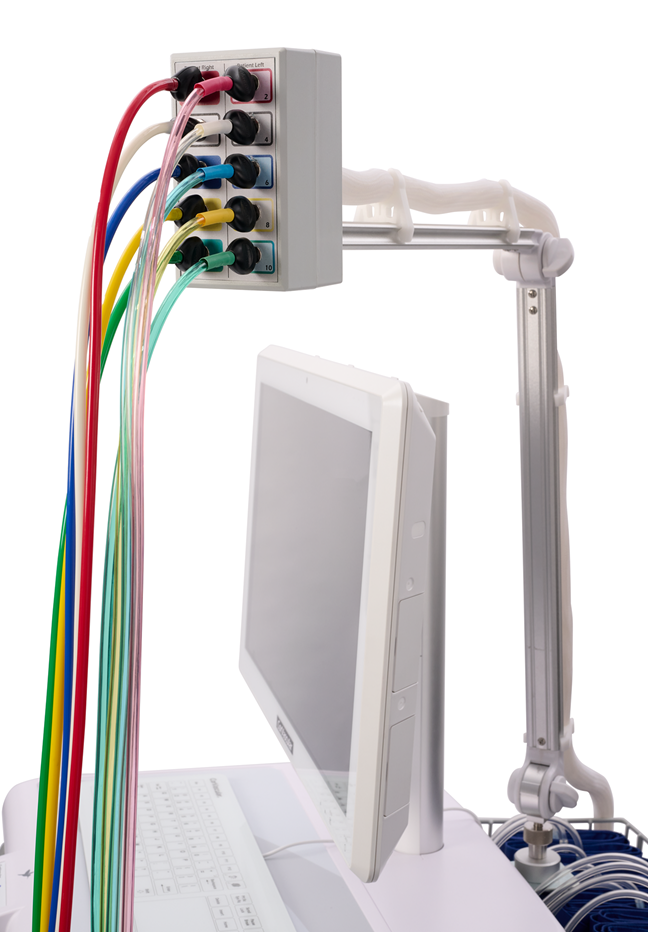
Cuffs are placed on the big toes, ankles, calves, upper and lower thighs, and arms. Each cuff inflates to a low reference pressure, then registers the pulsatile change in limb volume with every heartbeat, producing a waveform for each level on screen. VasoGuard's CuffMatch technology enhances this process by providing real-time air volume measurements in cc's for each cuff, allowing immediate detection of improper wrapping that could affect measurement accuracy.
- Automated calibration for every channel and test
- High-fidelity pressure measurement for accurate readings
- Real-time waveform display and data export
Cuff Wrapping Verification
- Real-time cc values for each cuff during segmental assessment
- Comparison of cc values between cuffs reveals wrapping inconsistencies
- Differences in cc values indicate improper cuff placement
- Immediate correction prevents subsequent incorrect measurements
- Ensures consistent, reliable results across all tests
Proper cuff wrapping is critical for accurate PVR measurements. VasoGuard's unique ability to display the volume of air in each cuff (in cc's) provides immediate visual feedback, allowing clinicians to identify and correct improper wrapping before it affects measurement accuracy.
Impact of Improper Cuff Wrapping on Blood Pressure Accuracy
| Cuff Wrapping Issue | Blood Pressure Error | Clinical Impact |
|---|---|---|
| Cuff too loose | +10 to +30 mmHg systolic | False hypertension diagnosis |
| Cuff too tight | -5 to -15 mmHg systolic | Missed hypertension |
| Cuff over clothing | +5 to +15 mmHg systolic | Inaccurate baseline readings |
| Wrong cuff size | ±10 to ±20 mmHg | Systematic measurement errors |
| Cuff positioned incorrectly | ±5 to ±25 mmHg | Variable, unpredictable errors |
See CuffMatch in Action
The cuff always inflates to the same reference pressure, then senses the pulse-volume waveform. The air-volume gauge is the tell: a snug wrap reaches pressure on the expected air, a loose cuff needs too much (and the waveform dampens), and a too-tight cuff reaches it on too little (and the waveform distorts).
Clinical Value of CuffMatch
Pulse volume recording is a cornerstone of modern vascular diagnostics, and CuffMatch verifies cuff fit on every channel so each study is dependable. It is especially valuable for:
- Detecting and grading peripheral arterial disease (PAD)
- Assessing arterial occlusions and stenosis
- Monitoring post-intervention outcomes
- Evaluating limb perfusion in diabetic and high-risk patients
- Supporting clinical decision-making with objective, reproducible data
The ability to obtain verified, quantitative results sets VasoGuard apart, providing clinicians with the confidence to diagnose and manage vascular disease at the highest standard of care.
VasoGuard's Advanced PVR Technology
VasoGuard systems feature state-of-the-art CuffMatch technology:
- Independent, calibrated pressure channels for each limb
- Real-time cc air volume display for each cuff during testing
- Automated workflow and intuitive user interface
- Comprehensive data export for EMR and research
- Continuous software updates and support
With VasoGuard, clinicians benefit from a robust, user-friendly platform that delivers both clinical accuracy and operational efficiency.
Why Choose CuffMatch?
Pulse Volume Recording (PVR) is a core physiologic test in the non-invasive vascular lab, especially valuable when calcified, non-compressible vessels make ankle-pressure (ABI) testing unreliable. VasoGuard's CuffMatch technology makes every PVR dependable by verifying cuff fit on each channel. Its ability to provide both qualitative and quantitative data makes it indispensable for modern vascular labs. VasoGuard's implementation ensures that every test is accurate, repeatable, and easy to perform, supporting better patient outcomes and streamlined clinical workflows.
- Reliable for PAD diagnosis and monitoring, even in calcified, non-compressible vessels
- Trusted by vascular specialists and sonographers
- Seamless integration with other diagnostic modalities
- Backed by CorVascular's commitment to innovation and support
- Unique real-time cc air volume display for each cuff
- Immediate detection of improper cuff wrapping through air volume comparison