
1.80×
First-attempt success rate ratio
Meta-analysis of emergency-department patients with difficult IV access; ultrasound-guided vs landmark technique (RR 1.80; 95% CI 1.18 to 2.73).
Wireless Ultrasound for Vascular Access
IVScanner™ brings wireless ultrasound and ASUS Needle Enhance technology to the bedside, helping trained clinicians visualize the target vessel and advancing needle during ultrasound-guided vascular access.
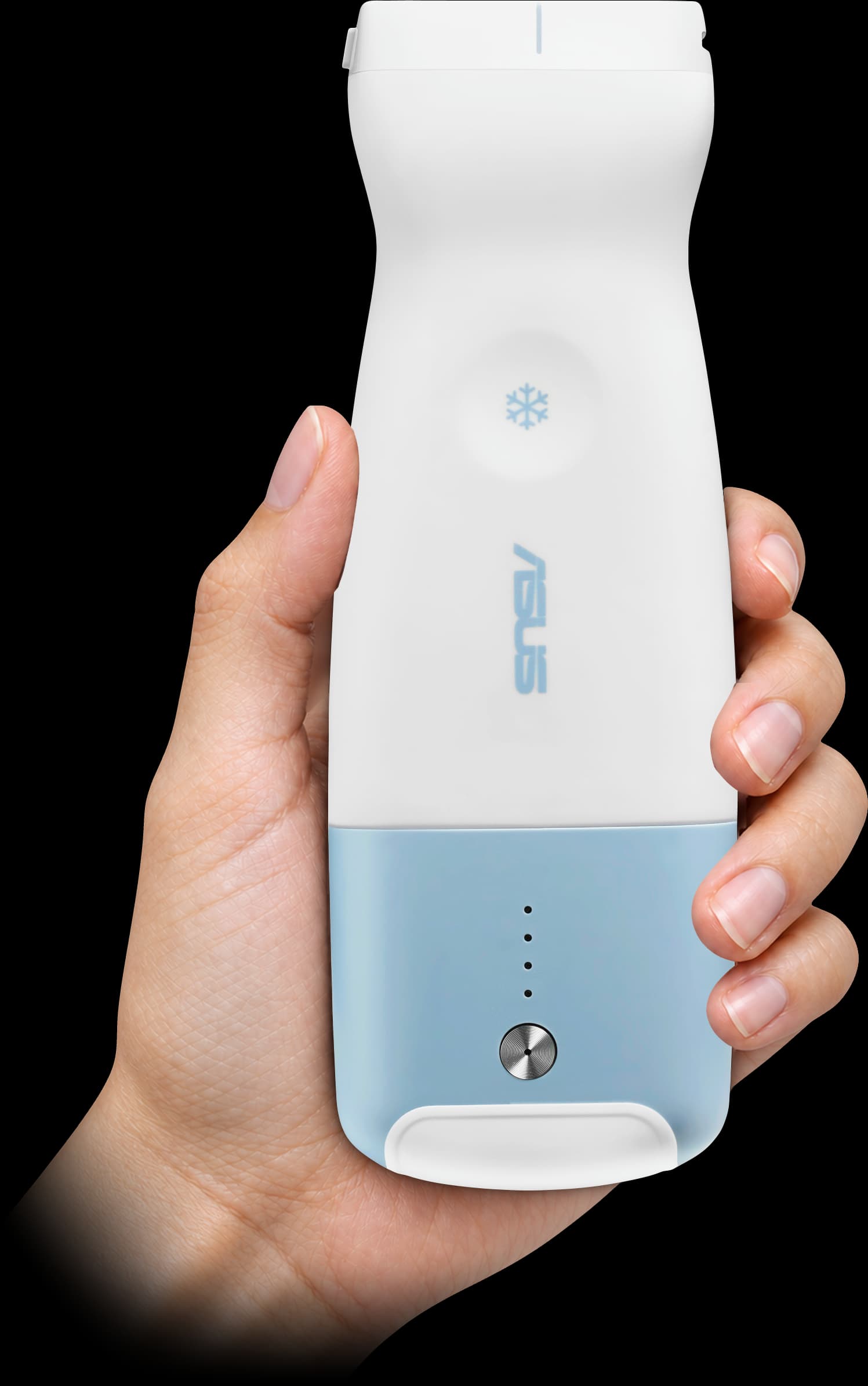
IVScanner™ is a Focused POCUS Solution from

The Complete Solution
IVScanner brings together the elements needed to evaluate and implement ultrasound-guided peripheral IV access: technology, clinical workflow, and a plan for training.
ASUS LU800L linear ultrasound supports peripheral-vessel imaging and freehand needle/catheter interventional guidance, without a traditional tethered probe.
ASUS Needle Enhance includes adjustable Needle Angle and Needle Gain controls to support needle visualization during ultrasound-guided procedures.
An approach to role definition, hands-on learning, and competency-based adoption that can be aligned with each organization’s policies and clinical resources.
The Distinguishing Feature
Finding a vein is only part of the procedure. During ultrasound-guided access, clinicians also need to distinguish the advancing needle from the surrounding anatomy.
How It Works
IVScanner is designed around a simple, clinician-directed workflow. Procedures are performed by appropriately trained staff within institutional protocols and scope of practice.
Identify patients who may benefit from ultrasound-guided peripheral IV access.
Use the linear probe to evaluate candidate vessels and surrounding anatomy.
Use real-time ultrasound and appropriate settings to guide needle advancement.
Confirm and document access according to facility policy and standard clinical practice.
Where It Can Fit
IVScanner starts with the workflow challenge of patients whose veins are difficult to access using traditional palpation or visualization alone.
Whether a team is building ultrasound-guided peripheral IV capability or expanding access beyond a specialized team, the goal is practical bedside readiness, not another general-purpose ultrasound system to figure out.
Focus the technology on one repeatable procedure, then build the clinical competency around it.
Discuss Your SettingThe Published Evidence
Independent research supports ultrasound-guided peripheral IV cannulation for patients with difficult intravenous access. These findings support the technique; they are not IVScanner-specific performance claims.
1.80×
Meta-analysis of emergency-department patients with difficult IV access; ultrasound-guided vs landmark technique (RR 1.80; 95% CI 1.18 to 2.73).
8 RCTs
Included in the systematic review. The first-attempt success meta-analysis used 940 of those patients.
24 RCTs
A 2026 network meta-analysis found ultrasound guidance improved first-attempt and overall success in adults with difficult IV access compared with standard practice.
Important distinction: These studies evaluate ultrasound-guided access in general, not ASUS Needle Enhance or IVScanner. Benefits depend on patient selection, training, and technique.
Frequently Asked Questions
For clinical leaders considering an ultrasound-guided IV access workflow.
IVScanner is a focused vascular-access solution based on ASUS wireless ultrasound. Unlike infrared vein visualization, ultrasound displays subsurface anatomy and supports real-time guidance during the procedure.
ASUS lists Needle Enhance as an imaging function with Needle Angle and Needle Gain controls. It is intended to support needle visualization; it should not be confused with automated needle-tip tracking or a guarantee of successful cannulation.
Appropriately trained, credentialed, or authorized healthcare professionals operating within their scope of practice and organizational policies. Training and competencies should be established before clinical use.
Yes. The ASUS LU800L's FDA-cleared uses are general abdominal imaging, pediatric, small organ (thyroid, prostate, scrotum, breast), neonatal cephalic, musculoskeletal (conventional), musculoskeletal (superficial), peripheral vessel, carotid, pulmonary, and interventional guidance (free-hand needle/catheter). IVScanner focuses the probe on ultrasound-guided peripheral IV access.
Clinical literature supports ultrasound guidance for difficult peripheral IV access, but we have not identified device-specific trials measuring the added effect of the ASUS Needle Enhance function. We do not make a quantified success claim for this feature.
Start a Pilot
Tell CorVascular about your current IV access process, clinical setting, and training needs. We can discuss whether an IVScanner pilot makes sense.
Intended for healthcare professionals. Ultrasound imaging and guided procedures must be performed by qualified and trained clinicians using aseptic technique, device labeling, and institutional protocols. The ASUS LU800 series FDA 510(k) clearance (K250791) is for the ASUS ultrasound device; this page does not claim a separate FDA clearance for IVScanner.
Scientific findings cited are for ultrasound-guided intravenous access generally, not clinical validation of IVScanner or the ASUS Needle Enhance feature.
IVScanner™ is a trademark of CorVascular. ASUS® is a registered trademark of ASUSTeK Computer Inc.
CorVascular is the exclusive U.S. importer and vascular market distributor for ASUS's portfolio of FDA-cleared ultrasound devices.